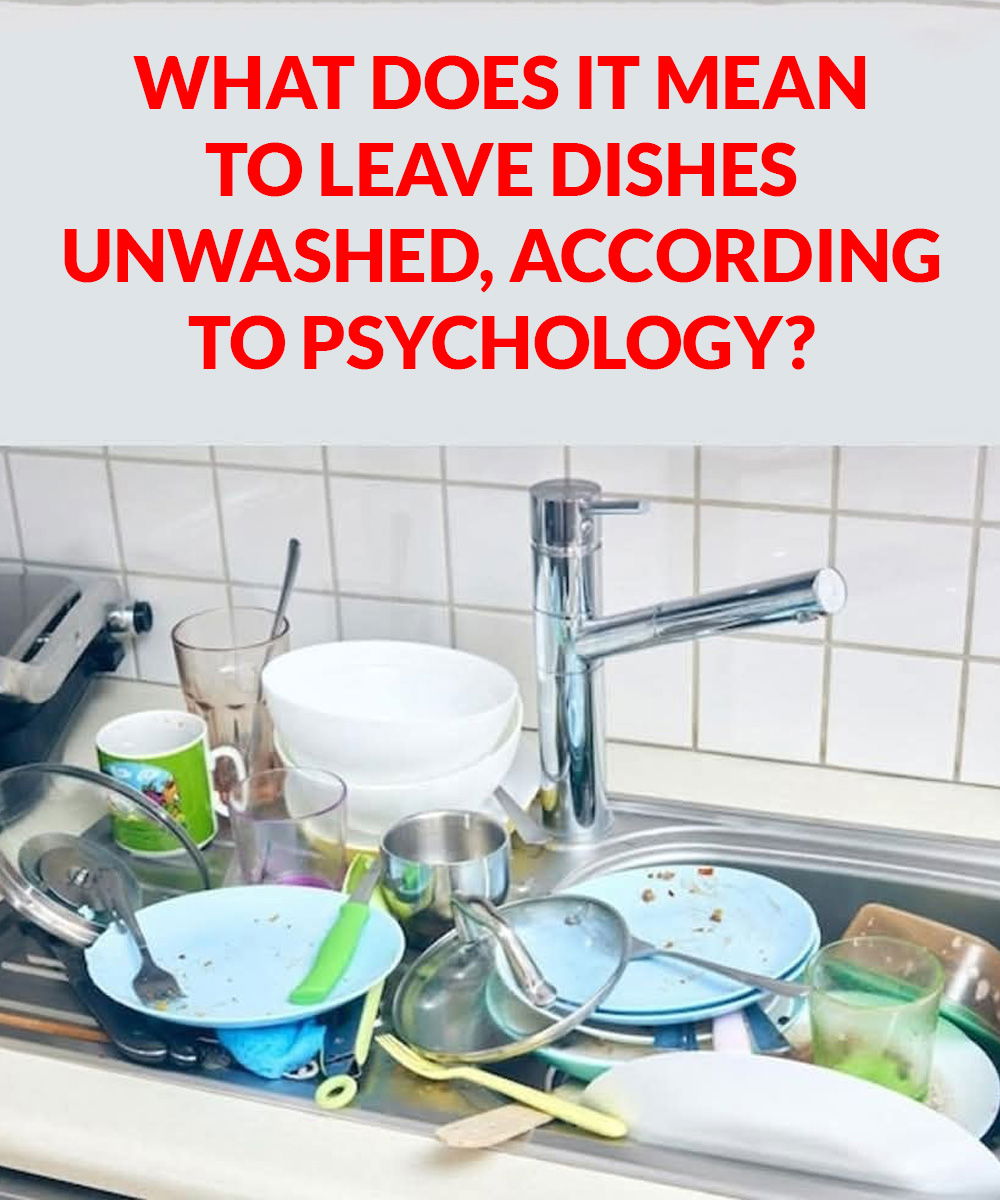
The state of our home can be a reflection of our mental state. One of the most common household chores, washing dishes, can say a lot about our psychology, our habits, and even our emotional well-being.
If you’ve ever wondered why some people leave dirty dishes in the sink and what impact this can have on their lives, here we explore the meaning behind this behavior and the reasons why it’s important to keep this habit under control.
The Psychological Significance of Dirty Dishes

Leaving dishes unwashed can be related to several psychological factors, including:
1. Stress and Exhaustion
Many people leave dirty dishes because they are too physically or mentally exhausted to tackle the task. A busy day or an excessive load of responsibilities can make small household chores overwhelming.
2. Procrastination and Disorganization
Procrastination doesn’t only occur in the workplace or at school. It can also extend to household chores. Some people put off washing dishes because they consider it a bothersome or low-priority task, which may indicate a general tendency to procrastinate in other aspects of life.
3. Emotional State and Mental Health
Clutter and piled-up dishes can be symptoms of emotional problems such as depression or anxiety. When a person is going through a difficult time, household chores may take a backseat, reflecting their emotional state.
4. Lack of Structured Habits
The habit of leaving dirty dishes can also stem from a lack of a structured routine in daily life. People who haven’t developed organizational habits may find it difficult to maintain order at home.
Reasons to Stop Dishes from Piling Up

Regardless of the reason behind leaving dirty dishes, keeping them piled up can have negative consequences for both physical and mental well-being. Some reasons to prevent dishes from piling up include:
1. Preventing the growth of bacteria and unpleasant odors
Food leftovers on dishes can quickly become a breeding ground for bacteria and attract insects such as flies and cockroaches. In addition, unpleasant odors can permeate the kitchen and the rest of the home.
2. Reducing Visual and Mental Stress
A cluttered space can create a sense of chaos and stress. Seeing a pile of dirty dishes can make a person feel overwhelmed and guilty, affecting their mood and productivity.
3. Promoting Discipline and Self-Care
Washing dishes immediately after eating is an exercise in discipline and self-care. Keeping the kitchen clean helps develop organizational and responsible habits.
4. Improving Coexistence
In shared homes, the accumulation of dirty dishes can be a source of conflict between family members or roommates. Keeping the kitchen tidy contributes to better coexistence and communication.
Conclusion
The habit of washing dishes is not just a household chore, but also a reflection of our discipline, state of mind, and lifestyle habits. While occasionally leaving dirty dishes isn’t a serious problem, allowing them to pile up can affect health, emotional well-being, and harmony in the home.
Making a conscious effort to keep the kitchen clean can bring significant benefits, from improving mood to fostering a greater sense of control over daily life. How do you manage this task in your daily life?