He was the youngest of ten children, born into a loud, intellectual, deeply Catholic household where debate was encouraged and curiosity was never punished. But when he was just ten years old, that world collapsed in a single morning.
In 1974, his father—a respected doctor and academic—and two of his brothers were killed in a plane crash while traveling to enroll the boys at a boarding school. The flight never reached its destination. It went down just miles from the runway, leaving only a handful of survivors and tearing the heart out of one family.
For the boy left behind, grief didn’t explode loudly. It settled quietly.
He later described how his childhood ended overnight. The house grew still. The noise of siblings disappeared. Ordinary worries vanished, replaced by something heavier and harder to name. He and his mother—who had already endured more loss than most people face in a lifetime—learned how to exist together in a new, muted reality.
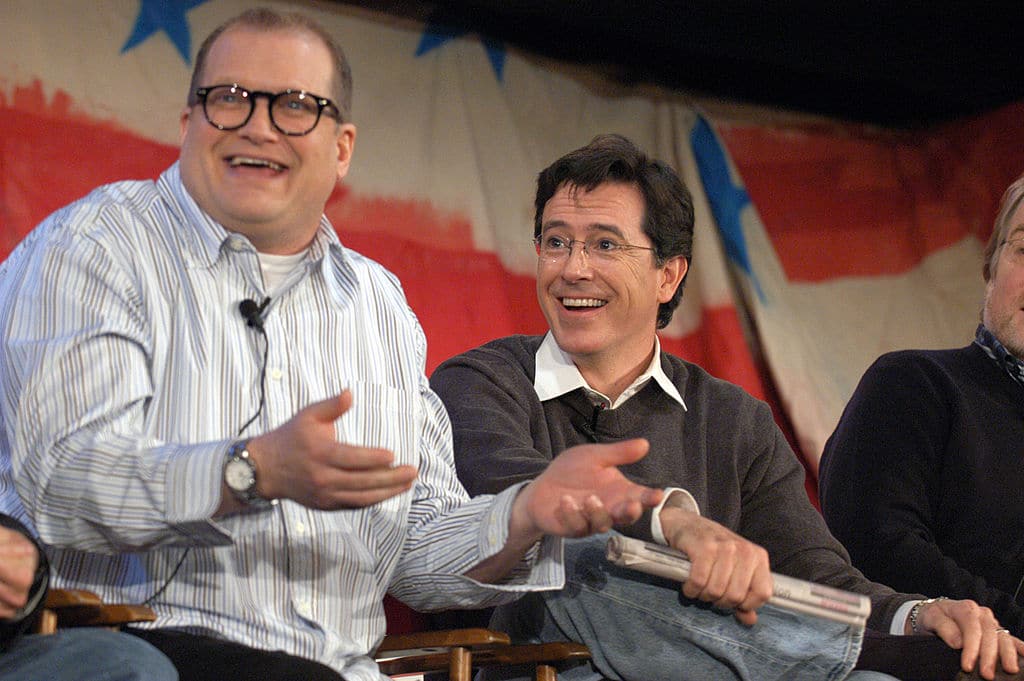
Years later, Stephen Colbert would reflect on that time with startling clarity. He spoke about being “personally shattered,” about how grief doesn’t simply pass but reshapes you. His mother, he said, found purpose in caring for him. And he, still a child, found himself caring for her in return.
School stopped making sense after the crash. Rules and grades felt irrelevant. Instead, he disappeared into books—especially fantasy and science fiction. The worlds of J.R.R. Tolkien gave him structure when real life felt broken beyond repair. His Catholic faith also became an anchor, not because it offered easy answers, but because it gave him permission to sit with sorrow without turning away from it.
He noticed early how Southern accents were mocked on television, portrayed as a shorthand for ignorance. So he trained himself to speak like a news anchor, flattening his voice, perfecting his diction—learning, without realizing it, the mechanics of performance.
Comedy wasn’t the goal. Drama was. He dreamed of becoming a serious actor, someone who carried weight and gravitas. But grief has a way of rerouting ambition.
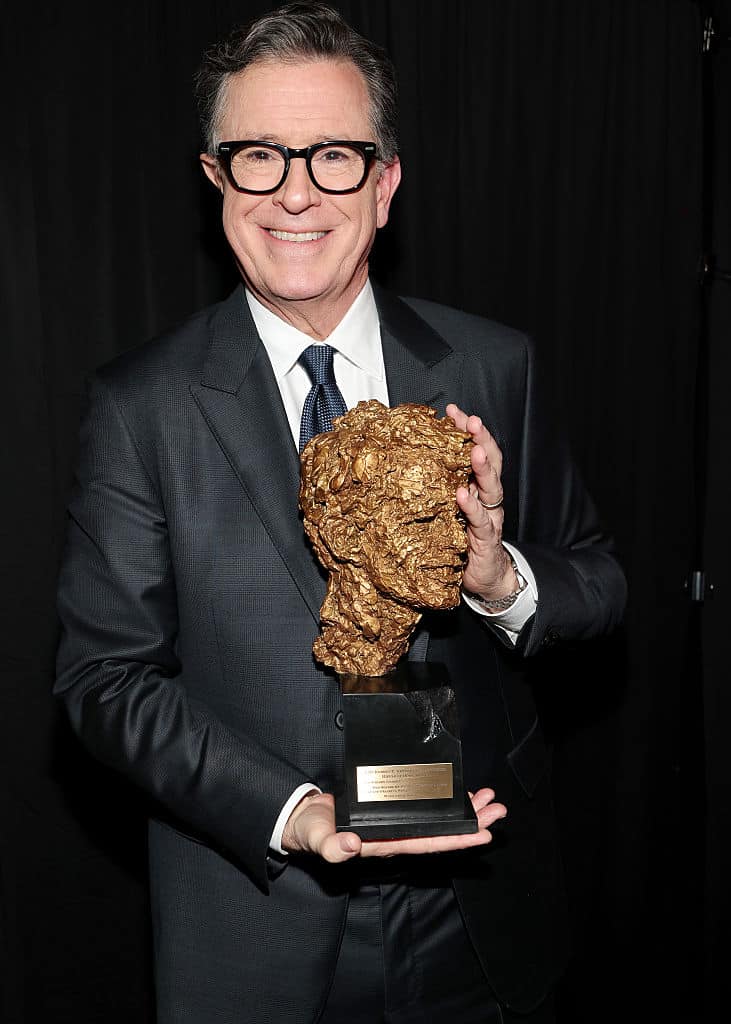
At Northwestern University, where he studied theater, the sadness he’d held at bay finally caught up with him. He lost a significant amount of weight and later admitted he was in “bad shape.” For the first time, he had the space—and the silence—to feel everything he’d buried.
Then came improvisation.
Not as an escape, but as a release. Comedy didn’t erase the pain; it gave it motion. He joined Second City’s touring company, initially understudying for Steve Carell, and there found collaborators who would shape his creative voice. Satire, it turned out, was a way to tell the truth sideways.
That path led him to The Daily Show, then to The Colbert Report, where he famously played a hyper-patriotic caricature that skewered politics by exaggerating it. Eventually, that character was set aside when he stepped into one of television’s most intimidating roles: succeeding David Letterman on The Late Show with Stephen Colbert.
When CBS handed him the desk in 2015, they promised viewers something new: the real Stephen Colbert. What emerged was a host who blended sharp political commentary with genuine curiosity, humor with empathy. Ratings soared. The show dominated late night for years, and Colbert became one of television’s most influential voices.

Success brought wealth and visibility, but it didn’t erase loss. He has spoken openly about health scares, including emergency surgery and a condition that affects his balance. In 2013, he lost his mother, a woman he credited with teaching him how to love life without bitterness despite unimaginable tragedy.
He once said grief is like a wolf at the door: ignore it, and it waits; acknowledge it, and you learn how to live alongside it.
In 2025, CBS announced that The Late Show would end in 2026, closing a franchise that had run for more than three decades. The network praised Colbert’s talent and impact, calling the decision “agonizing.” But even as one chapter closes, his influence continues—both as a mentor to new voices and as a creative force behind the scenes.
Looking at his life in reverse, it’s tempting to see a straight line from tragedy to triumph. But the truth is quieter and more complicated. What shaped Stephen Colbert wasn’t just loss—it was what he chose to do with it.
He didn’t outrun grief. He carried it. And somehow, through faith, imagination, and a deeply human sense of humor, he turned it into a voice millions recognize—not because it’s loud, but because it’s honest.
Were you aware of the tragedy that shaped his early life?