When my mother died, I didn’t just lose a parent. I lost the map of my life—and inherited a responsibility so heavy it changed the way I breathed.
Six months earlier, my world had been clean and predictable. I was twenty-five, a structural engineer with a calendar full of deadlines and a brain wired for plans. I had a steady job, a decent apartment, and the kind of future you can explain in one sentence. I was engaged. We had a venue shortlist, a guest list, and a honeymoon in Maui that was already half paid. My fiancée, Jenna, talked about baby names like they were groceries and browsed paint samples for a nursery we hadn’t earned yet.
Life wasn’t perfect, but it made sense.
“James, you work too much,” she’d tell me, lining up vitamin bottles on the counter like she was building a miniature pharmacy. “I’m proud of you. I just want you to be healthy. I want a long life with you.”
It felt like love. It sounded like love. I believed it was love.
Then my mother, Naomi, was killed in a car accident on an errand so ordinary it still makes me sick to think about. She had been picking up birthday candles for my ten-year-old twin sisters, Lily and Maya. One moment she was alive and thinking about frosting and gifts. The next, the police were on my doorstep, and the world I knew fractured.
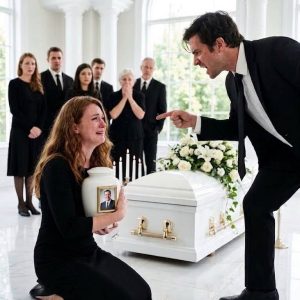
The funeral passed in a blur of condolence casseroles and well-meaning strangers. I remember the way Lily’s hand locked around mine until my fingers went numb. I remember Maya staring at the casket like her mind was refusing to translate what her eyes were seeing. I remember realizing there was no one else.
Our father had vanished years earlier, the minute he learned my mother was pregnant with twins. No child support, no calls, no explanation. He was a ghost with a first name and nothing more. There was no aunt stepping in, no grandparents with a spare room, no safety net waiting beneath us.
It was just the three of us standing in the wreckage.
Overnight, I went from brother to guardian. From a man who designed foundations to the foundation itself. I moved back into my mother’s house the same night I signed the first forms, leaving behind my apartment, my routines, and the comfortable illusion that adulthood arrives only after you’re fully ready.
Nothing in my engineering training prepared me for brushing tangles out of two grieving girls’ hair while pretending my own heart wasn’t collapsing. Nothing prepared me for school forms, therapy appointments, grocery lists, bedtime tears, and the constant fear that I’d fail them in a way they couldn’t afford.
I was drowning quietly, one day at a time.
Jenna, on the surface, looked like she was thriving in the chaos.
Two weeks after the funeral, she moved in. She didn’t ask, not really—she framed it as support, as partnership. She packed lunches with little notes. She learned how to braid hair from videos and practiced until her fingers stopped fumbling. She printed chore charts with bright colors. She played soft lullabies at night when the twins couldn’t sleep. When Maya wrote “Jenna” as an emergency contact in her school notebook, Jenna cried like it was the sweetest honor anyone had ever given her.
“I’ve always wanted sisters,” she said, pulling the girls close.
I watched her, stunned by her competence, relieved by her presence. I thought the universe had taken my mother and offered me grace in return, a person who would help me keep the pieces together.
What I didn’t understand was that I wasn’t witnessing devotion. I was watching a performance.
It happened on a Tuesday—last Tuesday, the kind of day that starts ordinary and ends like a door slammed in your face. I came home early from work because a meeting got canceled. The sky was thick with the kind of clouds that push down on the world before it rains. The yard looked calm: Maya’s bike on its side near the steps, Lily’s gardening gloves lined up neatly on the porch rail.
Inside, the house smelled like cinnamon and glue—holiday crafts, I assumed. I stepped into the hallway, half-smiling, ready to call out.
Then I heard Jenna’s voice.
It wasn’t her cheerful, encouraging tone. It was lower, sharper, controlled. The kind of voice you use when you think no one can challenge you.
“Girls,” she said, “you’re not going to be here much longer. So don’t get too attached.”
My whole body stalled. My hand stayed on the doorknob like I’d been caught mid-motion.
“I’m not spending my twenties raising someone else’s kids,” she continued, as if she were discussing a minor inconvenience. “A foster family would be better. When the adoption interview comes up, you’ll tell them you want to leave. Do you understand?”
There was a silence so complete I could hear my own heartbeat thudding in my ears.
Then a small sound—Maya, trying not to cry and failing.
“Don’t start that,” Jenna snapped. “If you cry again, I’ll throw away your notebooks. And stop with those dumb stories you write. They’re not going to matter where you’re going.”
“But we want to stay with James,” Maya whispered. Her voice was thin and breaking. “He’s the best brother in the world.”
Something inside me split open.
“You don’t get to want things,” Jenna replied, calm again, almost bored. “Go do your homework.”
Footsteps went up the stairs. A door shut.
I didn’t move. I didn’t breathe. I stood there in the hallway, feeling like the floor had turned to ice under my feet.
Then Jenna’s voice changed—bright, casual. A phone call.
“They’re finally out of my face,” she said, laughing softly. “I’m exhausted, Karen. Playing perfect caretaker is draining.”
A pause.
“He won’t move forward with the wedding because of them. Once they’re adopted, they’re legally his problem. That’s why they need to go.”
Another pause, longer.
“The house, the insurance money… that should be ours,” she added, like she was stating something obvious. “I just need my name on the deed. After that, I don’t care what happens to them.”
My mouth went dry. My hands shook so hard I had to press them against my thighs.
I backed out of the house without making a sound, got into my car, and sat there staring at my steering wheel like it could explain the last ten minutes. I wasn’t even fully angry yet. I was beyond that. I was clear.
This wasn’t a slip. It wasn’t stress. It wasn’t an ugly moment.
It was a plan.
That night, I came home with pizza and acted like nothing had happened. I laughed at the twins’ jokes. I checked homework. I read them a chapter of a book our mother used to read with them and kept my voice steady.
Later, when they were asleep, Jenna curled up beside me on the couch like she hadn’t just tried to dismantle my family.
I looked at her and made myself speak gently.
“Maybe you were right,” I said. “Maybe I can’t do this. Maybe I’m not built for it.”
Her head lifted so fast it was almost comical. Her eyes brightened, hungry.
“And maybe we shouldn’t delay the wedding,” I added. “Life is short. Maybe we should stop waiting.”
She didn’t question it. She lit up like I’d handed her the world.
By morning, she was booking a ballroom and texting vendors.
Meanwhile, I was making phone calls of my own. Quiet ones. Precise ones. The kind you make when the stakes are your entire life.
I spoke to a lawyer. I spoke to the social worker assigned to our case. I documented everything. I made sure my bases were covered the way I used to check calculations before signing off on a project. Only this time, I wasn’t protecting a building. I was protecting two little girls who had already lost too much.
The wedding night arrived dressed in white linens and candlelight. Jenna looked radiant, triumphant. She believed she had won. She believed she had finally outplayed the obstacle standing between her and what she wanted.
At the reception, she took the microphone to make a speech.
I stepped forward and reached for it. “Actually,” I said, calm enough to surprise even myself, “I have something to share.”
Her smile tightened. Confusion flickered. The room quieted.
A screen behind us lit up.
Audio played—clear, unedited, unmistakable.
Her voice filled the room, sharp and cruel, laying out her intentions like a blueprint. The words she’d thought were safe in private became public truth.
You’re not going to be here much longer. You don’t get to want things. I need my name on the deed. I don’t care what happens to them.
People turned to stare at her. Guests who had hugged her, praised her, told her she was “so strong,” now looked like they’d swallowed something sour.
Jenna’s face drained of color. “James,” she hissed under her breath, “turn that off.”
I didn’t raise my voice. I didn’t insult her. I didn’t need to.
“I heard everything,” I said. “You weren’t building a family. You were trying to erase one.”
Security escorted her out. She fought it at first, then realized she couldn’t fight the room. Not with her own words still hanging in the air like smoke.
I didn’t feel satisfied. Revenge wasn’t the point. What I felt was relief, pure and clean, like I’d finally exhaled after holding my breath for months.
A week later, the adoption was finalized.
That night, we made spaghetti. Lily stirred the pot with fierce concentration. Maya danced around the kitchen shaking parmesan like it was confetti. We lit a candle for our mother and sat at the table in a house that felt different now—lighter, safer.
“We knew you’d choose us,” Lily said quietly, like she’d been holding the question in her chest for months.
I didn’t answer with a speech. I didn’t pretend I was unbreakable.
I cried. Right there at the table. I let them see it.
Not because I was weak, and not because I was strong.
Because I was present.
Because I was theirs.
And for the first time since the accident, the house didn’t feel like a place we were surviving inside.
It felt like home.