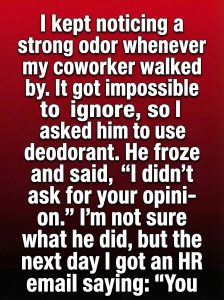
At first, I convinced myself it was nothing worth mentioning. Offices are filled with small irritations that everyone silently tolerates: the clatter of keyboards, the hum of outdated printers, the stale smell of reheated lunches. This felt like just another one. But as the days passed, the strong odor that followed one coworker from desk to meeting room became impossible to ignore. It lingered in shared spaces and subtly shifted the mood of conversations. People opened windows, wrapped scarves tighter, and avoided sitting nearby without ever saying why.
I found myself growing tense, distracted, and quietly resentful, even as I told myself it wasn’t fair to feel that way.
After days of internal debate, I made what I thought was the mature choice. Instead of letting frustration fester, I spoke to him privately. I chose my words carefully, keeping my voice low and my tone gentle, framing the issue as concern rather than criticism. I expected discomfort, maybe embarrassment, but also understanding. Instead, his reaction startled me. His posture stiffened, his face closed off, and his answers became short and guarded. The warmth of our professional rapport vanished in seconds. The rest of the day felt heavy, every interaction strained. I replayed the conversation again and again, wondering whether honesty had crossed into harm, and whether silence might have been the kinder option after all
.After days of internal debate, I made what I thought was the mature choice. Instead of letting frustration fester, I spoke to him privately. I chose my words carefully, keeping my voice low and my tone gentle, framing the issue as concern rather than criticism. I expected discomfort, maybe embarrassment, but also understanding. Instead, his reaction startled me. His posture stiffened, his face closed off, and his answers became short and guarded. The warmth of our professional rapport vanished in seconds. The rest of the day felt heavy, every interaction strained. I replayed the conversation again and again, wondering whether honesty had crossed into harm, and whether silence might have been the kinder option after all.
The next morning, an email from Human Resources appeared in my inbox. My heart sank as I opened it, bracing for consequences. The message was calm but firm, reminding staff about respectful communication and explaining that sensitive issues should be handled through management. It also mentioned accommodations, privacy, and inclusivity. Those words stayed with me long after I closed the email. Later, through appropriate channels, I learned the truth. My coworker had a medical condition that affected his body in ways he could not fully control, despite treatment and careful effort. What I had viewed as a fixable inconvenience was, for him, a deeply personal and ongoing challenge.
That realization shifted something in me. I felt humbled, not because my intentions had been cruel, but because they had been incomplete. I had seen a surface-level issue and assumed the story ended there. This experience changed how I move through shared professional spaces. It taught me that empathy isn’t always about addressing what bothers us directly; sometimes it’s about recognizing what we don’t know and allowing space for dignity. Workplaces are not just collections of roles and responsibilities, but intersections of complex human lives. Since then, I try to lead with patience, to pause before judging, and to remember that behind every discomfort may be a story far heavier than it appears.