I Was Putting On My Coat To Go To The Reconciliation Dinner At My Sister’s House. Then My Lawyer Texted: “STOP! IT IS A TRAP!” What He Showed Me About Her Secret Plan… Changed Everything
Part 1
My hand was already on the door handle when my phone buzzed.
I was halfway into my coat, the heavy wool scratching my neck, the smell of rain trapped in the fabric like an old memory. The apartment behind me looked too clean for a woman who’d spent the last hour walking in circles, rehearsing smiles in the mirror. On the kitchen counter sat a bottle of sparkling water I’d opened and never drank. On the table, my car keys lay exactly where I’d left them, which was so rare lately it felt suspicious.
Reconciliation dinner, Aurora had called it. Like we’d been in a petty fight over borrowed shoes instead of years of cold, careful distance.
I glanced down at the screen.
Mr. Henderson, my lawyer.
The message was short. All caps. Wrong in the way a smoke alarm is wrong when you haven’t even lit a candle.
STOP.
DO NOT DRIVE TO BIG SUR.
IT IS A TRAP.
CALL ME NOW.
My breath snagged, sharp and shallow. My fingers tightened on the doorknob until my knuckles ached. I didn’t move. I didn’t blink. I just stood there, suddenly aware of how loud my own heartbeat was in my ears.
A second later, another notification popped up.
Aurora: Did you leave yet? We are all waiting.
That contrast—Henderson’s panic and Aurora’s warmth—sent a jolt of ice straight down my spine. It wasn’t just fear. It was recognition. Like my body had been waiting years for proof that what I’d been feeling wasn’t paranoia.
I let go of the doorknob slowly, like it might burn me.
I walked back to the couch, sat down, and hit call.
He picked up on the first ring. “Emma, listen to me very carefully.”
Henderson didn’t waste time with polite greetings. His voice had that tight professional urgency that cuts through the part of your brain that wants to deny everything.
“What’s going on?” I asked, but I already knew the shape of it. My stomach was hollow in the way it gets when you step onto a roller coaster and realize there’s no off switch.
“Aurora isn’t planning to sue you for the estate,” he said. “A lawsuit takes too long. And you turn twenty-five next week. That’s when the trust legally transfers to your control.”
The trust. The word was supposed to feel comforting—like a safety net my parents left behind. Fifteen million dollars, tucked away in legal language and managed by people in suits. But lately it had felt like a shadow that followed me everywhere, a prize someone else had already decided belonged to them.
“She can’t wait for a court date,” Henderson continued.
He paused. The silence on the line felt heavy enough to bruise.
“She’s hired a private patient transport team. They’re at the Big Sur house right now. The plan is to stage an intervention during dinner. She’s going to claim you’re having a psychotic break, that you’re a danger to yourself. She has a doctor there ready to sign a 5150 hold.”
I stared at the wall across from me, at a small crack in the paint I’d been meaning to fix. The room tilted, then snapped back into focus with terrifying clarity.
“If you walk into that house,” Henderson said, “you won’t walk out. You’ll be sedated, restrained, and locked in a facility until the birthday deadline passes. Once you’re declared incapacitated, she keeps control of the money.”
For a second, I couldn’t speak. I felt like my lungs had forgotten how to work.
Then something inside me went very still.
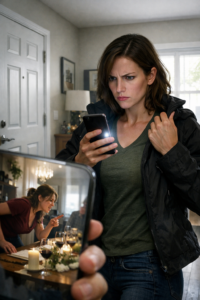
It wasn’t just the horror of what he was saying. It was the way it made the last three years suddenly make sense, like someone had turned on a light in a room I’d been stumbling through blind.
The missing keys that vanished from the hook and showed up in the fridge. The emails I swore I sent that mysteriously disappeared. The calendar alerts that were deleted so I missed appointments and looked irresponsible. The way my phone would “glitch” right when I tried to call someone for help.
Every time I panicked. Every time I cried in frustration.
Aurora was there.
She’d put a hand on my shoulder, her face arranged in that mask of tragic pity. “Oh, Emma,” she’d sigh, voice dripping with weaponized sweetness. “You’re having one of your episodes again. You’re getting just like Mom was toward the end.”
I’d believed her. I’d swallowed her concern like poison, thinking it was medicine. I’d let her convince me my mind was crumbling and she was the only one holding the walls up.
Because Aurora had raised me after our parents died. Because she’d been twenty-one and suddenly responsible for a ten-year-old with night terrors and homework and too many questions about why Mom and Dad weren’t coming back. Because when you owe someone your childhood, it’s hard to imagine they’d ever want to hurt you.
But Henderson was still talking, and I could hear him clicking a keyboard. “I’m sending you something now,” he said.
My phone chimed. One email. Then another. Screenshots. Invoices. A payment schedule. Messages between Aurora and a patient transport service. The name of a doctor: Vance. The fee for “on-site evaluation.” The phrase “family intervention” in clean typed letters.
The fog in my brain evaporated so fast it made me dizzy.
“I wasn’t crazy,” I whispered.
“No,” Henderson said. “You were being manipulated.”
There are betrayals that feel like a punch. This one felt like waking up and realizing your house has been on fire for years and you’ve been thanking the person holding the match for keeping you warm.
“Emma,” Henderson said, gentler now, “you need to stay away from Big Sur. I can get an emergency injunction. We can—”
“No.”
My voice didn’t shake. It sounded cold. Metallic. Like a door locking.
If I didn’t go, she’d try again. She’d show up at my apartment with crocodile tears and a doctor on speed dial. She’d ambush me at my office. She’d pick a moment when I was alone, tired, vulnerable—when my own doubts would do half the work for her.
I’d spent years being trained to freeze.
I was done freezing.
“I’m going to dinner,” I said.
Henderson’s inhale hissed through the speaker. “What are you doing?”
“Ending it,” I said, standing up. “Tonight.”
“Emma, that’s not—”
“I’m not going as the victim,” I cut in. “I’m going to rewrite the ending.”
I hung up before he could argue, because if I let him talk long enough, he might convince me to be reasonable. And reasonable had almost gotten me locked away.
I didn’t pack an overnight bag.
I packed evidence.
I grabbed my purse, then opened the drawer under my bed where I kept the things I never told Aurora about. A spare phone. A small satellite hotspot I’d bought after a friend in cybersecurity told me, quietly, that my “glitches” sounded less like bad luck and more like someone with access. I’d bought it and never used it because using it meant admitting the truth.
Tonight, admitting the truth was survival.
I also grabbed the folder Henderson had helped me assemble over the last year—documents, trust paperwork, notes I’d scribbled after strange incidents, dates and times and little red flags I’d tried to ignore. I used to feel embarrassed writing them down, like I was being dramatic. Now I wished I’d started sooner.
My car keys were still on the table.
I stared at them for a long beat, then picked them up and slid them into my pocket like a promise.
Before I walked out, I looked at my reflection in the dark TV screen. I didn’t look fragile. I looked pale, yes—but there was something sharper in my eyes than there had been an hour ago.
Fear had burned away.
What was left was math.
Aurora had built a plan like a balance sheet: isolate the asset, declare it unstable, transfer control.
Fine.
Then I was about to audit her.
Part 2
My first stop wasn’t Big Sur.
It was a private diagnostic lab downtown, the kind of place with soft lighting and discreet check-in screens so no one had to say what they were there for out loud. I didn’t waste time with insurance. I didn’t want anything that could be “misfiled” later. I paid the rush fee in cash and watched the receptionist’s eyebrows lift just slightly when she saw the amount.
“Full tox screen,” I said. “And I need documentation of mental status. Tonight.”
She started to explain policy. I slid more bills across the counter.
Policy changed.
Forty-five minutes later, I walked out with paper shields that could save my life: a timestamped comprehensive toxicology report and a psychiatric clearance that stated, in clinical language, that I was lucid, sober, oriented, and not presenting as a danger to myself or others.
Zero drugs.
Zero alcohol.
Zero confusion.
I sat in my car for a second, gripping the steering wheel, letting the air in my lungs feel real again. Then I made the call I’d been dreading for months—the one I’d avoided because it would mean dragging someone else into the mess.
Kaye answered on the first ring.
Her voice was a terrified whisper. “Aunt Emma? Are you coming?”
She was sixteen and too good at sounding small. That’s what happens when you grow up in a house where emotions are inconvenient. You learn to compress yourself into whatever shape is safest.
“I’m coming,” I said. “Are they there?”
“There’s a white van parked behind the guest house,” she breathed. “I saw men in scrubs carrying… straps. Mom said it’s nothing, but it’s not nothing. I know it’s not.”
My jaw clenched so hard it hurt.
Kaye wasn’t Aurora’s daughter by blood. She was Chad’s from a previous relationship, a detail Aurora always mentioned like a stain she’d chosen to tolerate. Aurora called herself Kaye’s mother in public and treated her like a staff member in private.
“I need you to do something for me,” I said, keeping my voice steady like an anchor. “Can you see the dining room from where you are?”
“I’m upstairs. I can see the sideboard.”
“Good.” I lowered my voice. “Do you see the wine decanter? The one your mom always sets out for me.”
“Yes.”
“Next to it, there should be a small blue vial.”
There was a tiny pause. “I see it. She just put it there.”
“She tells everyone it’s my anxiety medication,” I said. “Listen carefully. You’re going to switch it.”
“What?” Kaye sounded like she might cry. “Aunt Emma, I—”
“Dump it down the sink. Rinse the vial. Fill it with the liquid sweetener drops from the pantry. The vanilla ones. Then put it back exactly where it was.”
Silence stretched thin over the line. I could hear her breathing fast and shallow, the sound of panic trying to turn into obedience.
“What if she catches me?” Kaye whispered.
“She won’t,” I said, and I meant it. “Aurora doesn’t actually look at people, Kaye. She looks through them. You can do this.”
“I’m scared.”
“I know.” My throat tightened, but my voice stayed calm. “Be brave for two minutes. If you do this, I promise I will get us both out of there tonight.”
Another beat.
Then a shaky exhale. “Okay. I’m doing it.”
“Good girl,” I said softly. “Delete this call when we hang up.”
I ended it and sat there for a second, staring at the lab paperwork in my lap. The word lucid felt strange. Like a label I’d forgotten I was allowed to claim.
Then I started the engine.
The drive to Big Sur usually felt like an escape into paradise. The coastline, the cliffs, the expensive quiet—Aurora loved to call it healing.
Tonight, it felt like deployment.
The highway wound along the edge of the continent. The Pacific crashed hundreds of feet below, violent and gray, the sound more like an argument than a lullaby. Fog rolled in thick as wet cotton, erasing the world until all that was left was the narrow tunnel of asphalt ahead of me.
Aurora had chosen the location perfectly.
No neighbors close enough to hear you scream. Spotty cell service. A house perched on a cliff like an expensive threat.
Isolation was her favorite ingredient.
But she didn’t know everything.
In the lining of my purse, the satellite hotspot pressed against my palm like a secret. In my rearview mirror, far back but steady, an unmarked car kept pace—Henderson had insisted on calling in a favor with a county sheriff he trusted. I’d told him not to follow too close. Aurora would notice anything too obvious.
The fog thickened as I climbed toward the house. Trees appeared and disappeared like ghosts. Every curve in the road felt like stepping deeper into someone else’s story.
When the modern glass house finally emerged, it looked unreal—clean angles and bright windows suspended over darkness. The driveway was swallowed by fog behind me, a white wall that made it feel like the world had ended right at the property line.
No signal.
Just as Henderson warned. Somewhere inside, a jammer hummed, cutting me off from the outside like a lid sealing on a jar.
I stepped out of the car. The cold hit my cheeks hard. The ocean boomed below, a rhythmic thunder that vibrated through the soles of my shoes.
The front door opened before I reached the steps.
Aurora stood there in cream cashmere, hair glossy, posture perfect—every inch the concerned matriarch she liked to perform.
“Emma,” she breathed, pulling me into a hug that felt more like a frisk for a wire. “I was so worried you wouldn’t make it. You know how you get driving at night.”
“I made it,” I said, and let my voice waver just a fraction. I pulled back, wrapping my arms around myself in a gesture I knew she’d interpret as anxiety. “The fog was really thick. I think I got turned around twice.”
Aurora’s eyes flicked past me, fast and sharp, taking inventory of the driveway, the darkness, the absence of witnesses.
Then she smiled bigger.
“See?” she said over her shoulder, loud enough for someone inside to hear. “I told you she shouldn’t be driving. She’s confused.”
A figure hovered in the hallway.
Chad.
My brother-in-law looked like a ghost in his own house—tall, handsome, hollow-eyed, wearing a sweater too expensive to look comfortable. His gaze met mine for half a second, then slid away like he couldn’t bear the weight of it.
The house was freezing, temperature set to a sterile sixty-eight, the kind of chill that makes you aware of every hair on your arms. Aurora guided me toward the dining room like a handler steering an animal.
The table was set for four.
Candles. Linen napkins. The kind of beauty Aurora liked because it photographed well.
“I want you to meet someone,” she said, voice soft like a lullaby with teeth.
A man stood near the window.
Thick-set. Slightly sweaty despite the cold. Not a dinner guest energy. More like security dressed up to pretend.
“This is Dr. Vance,” Aurora said brightly. “An old friend of Chad’s. He just happened to be in the neighborhood.”
Dr. Vance stepped forward, and the way he looked at me wasn’t friendly. It was clinical. Predatory. Like he was already writing his conclusion.
“Nice to meet you, Emma,” he said. “Aurora has told me so much about you.”
“I bet she has,” I murmured, eyes down, shoulders slightly hunched—playing the part she’d been writing for me for years.
“Sit, sweetie,” Aurora said, pushing me gently into the chair facing the floor-to-ceiling window. Outside was pitch black. All I could see was my own reflection trapped in the glass under the chandelier’s light.
On the sideboard, the wine decanter waited. The red liquid glinted like a warning.
Aurora poured a generous glass with movements that were precise, rehearsed, her body angled to shield the action. She set it directly in front of my hand, positioning it like a weapon.
“Drink,” she said softly. “It’s a pinot. Your favorite. It’ll calm your nerves. You’re shaking, Emma.”
I looked down at my hand and made sure it trembled.
“I just…” I stammered, lifting my eyes to hers with practiced pleading. “I’ve been having a hard time, Aurora. I don’t know what’s real anymore. I feel like I’m losing time.”
It was the exact line she wanted. The cue in the script she’d written with years of sabotage.
A flash of triumph crossed her face, quick and sharp as a scalpel. Her fingers brushed my cheek, cold.
“I know, honey,” she said. “That’s why we’re here. We’re going to take care of you.”
Chad stared at the wall like it might open and swallow him.
Dr. Vance leaned forward, eyes fixed on the glass.
I lifted it.
“To family,” I murmured.
“To family,” Aurora echoed, smiling.
I drank.
To them, it was the end of my freedom.
To me, it was sugar water and grape juice.
Part 3
Three minutes passed.
Aurora checked her watch, subtle but unmistakable. This was when I was supposed to slur, slump, disappear. Her smile started to tighten at the edges, like a mask that didn’t fit as well as she expected.
I set the glass down carefully and blinked, slow.
Aurora’s eyes narrowed. “How are you feeling?”
I gave her what she wanted, just not the way she wanted it. I let my gaze drift, unfocused, like the room was swimming. I pressed my fingertips to my temple.
“I feel… strange,” I whispered.
Relief flooded her face so fast it was almost comical. She stood abruptly, chair scraping. “Oh God,” she said, voice rising on cue. “She’s crashing. Dr. Vance, do something.”
The kitchen door burst open.
Two men in dark scrubs rushed in, moving with the efficiency of people who’d done this before. One held restraints. The other carried something folded that looked like a straightjacket.
My stomach flipped—not from fear for myself, but from the realization that Aurora had ordered this like takeout. Like my autonomy was a problem she’d hired someone to remove.
“Secure her arms,” Vance ordered, reaching for a syringe. “She’ll resist.”
Chad covered his face with one hand, shoulders shaking.
Aurora grabbed my shoulders. Her nails dug into my sweater. “I’m sorry, Emma,” she hissed, the softness gone now that the performance had begun. “It’s for your own good.”
I stood up.
The movement was calm, controlled, nothing like the frantic thrashing Aurora had described in her emails. The wine glass tipped and shattered against the floor, sticky liquid splashing onto Aurora’s white pants.
The room froze.
The men hesitated, startled by the fact that I was upright, steady, looking at them like they were the ones who’d made a mistake.
“Get away from me,” I said, voice low and even.
“She’s manic!” Aurora shrieked, too loud, too fast. “She’s dangerous!”
“The only dangerous person here is you,” I replied.
I reached into my purse and placed a small black unit on the table. The satellite hotspot. A green light blinked steady.
Then I set my spare phone beside it, screen facing up. A live video feed played—our dining room, our faces, the men in scrubs, Dr. Vance with a syringe in his hand.
“We’re live,” I said. “Streaming to my lawyer and the county sheriff.”
Dr. Vance went pale. The syringe slipped slightly in his grip.
Aurora’s mouth opened, then closed, like a fish yanked out of water. “You’re bluffing,” she hissed.
I slid my lab paperwork onto the table, right beside the decanter.
Timestamped toxicology report.
Psychiatric clearance.
“Clean,” I said. “No drugs. No alcohol. Fully oriented.”
I turned to Vance. “Touch me and you lose your license forever. Whatever Aurora promised you isn’t worth prison.”
Vance’s eyes flicked to Aurora, then back to me. His confidence cracked like cheap glass. He took a step back.
“She said she had power of attorney,” he muttered, almost pleading with himself.
“She does,” I said, and shifted my gaze to Aurora.
Aurora’s face twitched. The mask was cracking now, the performance slipping. Her eyes were wild with the sudden terror of losing control.
“I decide what happens to you,” she whispered, voice shaking with rage. “You don’t understand how this works.”
“Oh, I understand,” I said quietly. “Better than you think.”
I leaned in just slightly, letting the calm in my voice do the cutting.
“I didn’t drink the wine,” I said.
Aurora’s pupils flared. “Yes you did.”
“Kaye switched it,” I replied.
For the first time, Aurora truly froze. Not the staged, dramatic freeze of someone pretending to be shocked. The real kind. The kind that happens when your brain hits a wall and can’t compute.
“She poured your cocktail down the sink two hours ago,” I continued. “And she’s been watching you. She knows what you are.”
Aurora spun toward the hallway. “Kaye!” she screamed, voice cracking. “Kaye, get down here!”
A soft footstep sounded on the stairs.
Kaye appeared at the edge of the dining room, pale but steady, holding a small amber vial between her fingers like it was radioactive.
“This is what she tried to drug the wine with,” Kaye said, voice trembling only a little. “Ketamine. From the vet.”
Aurora made a sound that wasn’t a word.
Then sirens cut through the fog outside, faint at first, then louder, closer. Blue and red lights pulsed through the glass walls like a heartbeat from the outside world.
Aurora backed up, bumping into her chair. “No,” she whispered. “No, no, no—”
The front door slammed open hard enough to rattle the house.
Deputies flooded in, weapons drawn but controlled, voices sharp and trained. “Sheriff’s office! Hands where we can see them!”
The men in scrubs dropped everything and put their hands up immediately. Dr. Vance tried to bolt toward the hallway, but two deputies tackled him before he made it three steps.
Aurora stood in the center of the dining room like a statue, hair perfect, cashmere stained with wine, face stripped of all warmth. Her eyes locked on mine, pure hatred, pure disbelief.
Henderson stepped in behind the deputies, breathless, suit slightly rumpled like he’d moved faster than he usually allowed himself to.
“Aurora Roberts,” he said, voice clear, “you are under arrest for conspiracy, attempted false imprisonment, and medical fraud.”
Aurora’s scream was high and ugly. “I have power of attorney!” she shrieked. “I have the right! She’s unstable! She’s sick!”
Henderson’s expression didn’t change. “That’s exactly why you lose everything,” he said. “By abusing it. You triggered the disinheritance clause.”
Aurora’s face drained of color so fast it was almost gray.
The clause had been buried in the trust documents, written by my father’s attorney after he’d watched too many families tear each other apart: any guardian or agent who used legal authority to unlawfully restrict my freedom or seize control of assets would be disqualified from benefiting. Not just removed. Disinherited. Criminal referral. Automatic audit.
Aurora had never believed rules applied to her.
I stepped closer, just enough that only she could hear me over the deputies’ radios.
“I gave you that power on purpose,” I said softly.
Her eyes widened, horror mixing with rage.
“I needed you to use it,” I finished. “So everyone could see what you’d do with it.”
They grabbed her arms.
Aurora thrashed, but it wasn’t the dramatic resistance she’d imagined for me. It was messy, desperate. She screamed Chad’s name, then Kaye’s, then mine, flipping through roles like masks she was trying to find the right one to save her.
Kaye didn’t move.
Chad sank into a chair like his strings had been cut.
As the deputies dragged Aurora toward the door, she twisted her head back, spitting the words like venom.
“You did this,” she snarled.
I met her gaze, steady.
“No,” I said. “You did.”
Outside, the fog swallowed her screams almost immediately, like the coastline itself was tired of carrying her lies.
Part 4
The first sunrise after the arrest didn’t feel like relief.
It felt like aftermath.
I sat in Henderson’s office with a paper cup of bad coffee growing cold between my hands, watching a deputy’s bodycam footage on a monitor. My own face stared back at me—calm, pale, eyes hard. I didn’t recognize myself, and I did. Like I’d finally met the person buried under years of doubt.
Henderson paused the video. “This is airtight,” he said. “The transport team signed contracts. Vance billed for an on-site hold evaluation. And Kaye’s testimony plus the swapped vial—”
“Kaye,” I whispered.
She was in a separate room down the hall with a victim advocate, wrapped in a blanket that looked like it belonged in a hospital. When I’d hugged her after the deputies cleared the house, she’d clung to me like she was afraid letting go would mean going back.
Aurora had been careful with Kaye, too. Not with affection—Aurora wasn’t built for that—but with control. A teenager is easy to discredit if you say the right things: troubled, dramatic, attention-seeking. Aurora had been laying that groundwork for years.
That was the part that made me nauseous. Not just what she tried to do to me, but how many people she’d quietly practiced on.
Child Protective Services moved faster than I expected, helped by the sheriff’s office and Henderson’s connections. By the end of the day, Kaye was placed with me under emergency guardianship. Chad didn’t fight it. He signed the paperwork with hands that wouldn’t stop shaking, eyes red, as if he’d woken up too late and realized the cost of staying asleep.
“I didn’t know,” he kept saying.
But he had known enough to look away.
Aurora’s lawyer tried to make noise in the press. Words like mental health and family concern showed up in carefully crafted statements, like perfume sprayed over rot. But then Henderson released the receipts: contracts, invoices, Vance’s texts, the bodycam footage. The story shifted overnight.
From concerned sister to alleged predator.
From intervention to attempted kidnapping under medical cover.
Dr. Vance’s licensing board suspended him within days. The transport company folded like paper when investigators discovered they’d accepted cash for “off the books” holds before. Aurora’s social circle—the club friends, the brunch crowd, the people who’d laughed at her jokes about my “episodes”—fell silent.
Money can buy a lot of loyalty, but it can’t buy people’s willingness to publicly attach themselves to a sinking ship.
The criminal case moved in chunks—arraignment, hearings, motions. Aurora tried to look composed in court. She wore tasteful outfits. She kept her chin up. She played victim with practiced elegance.
Then Kaye testified in a closed session, voice steady, and Aurora’s face cracked.
I didn’t enjoy watching her fall.
I enjoyed watching the truth stand up.
On my twenty-fifth birthday, Henderson met me at my bank.
He didn’t bring balloons. He brought documents.
We sat in a conference room with glass walls and a view of downtown that made everything look smaller than it was. Henderson slid the trust transfer paperwork across the table.
“This is the moment,” he said. “Once you sign, control is yours. Not Aurora’s. Not the trustees’. Yours.”
My hand hovered over the pen.
For years, I’d imagined this day would feel like winning the lottery. Like fireworks. Like a door swinging open into freedom.
Instead, it felt like grief.
Because fifteen million dollars was never the point. The point was that my parents had tried to protect me, and someone I loved had used that protection like a roadmap to hurt me.
I signed anyway.
The pen moved smoothly. My signature looked like a stranger’s, bold and clean.
When it was done, Henderson exhaled. “It’s secure,” he said. “And because of the clause, Aurora can’t touch any of it, even indirectly. The court’s financial restraining order will hold through sentencing.”
“Good,” I said, and surprised myself with how much I meant it.
Six months later, the Big Sur house was gone.
Not because I needed the money, but because I needed the symbol to stop existing. Henderson helped me arrange the sale under court supervision. The cliffside glass palace that once felt like power became what it always was: a pretty cage.
Kaye and I moved into a smaller place inland with warm light and neighbors close enough to hear you laugh. We painted the walls colors Aurora would’ve hated. We bought cheap furniture on purpose, just to prove we could.
Kaye started therapy. So did I.
Healing wasn’t a montage. It wasn’t a straight line. Some mornings I woke up convinced I’d forgotten something important, heart racing, and had to remind myself: I’m not crazy. I was trained to doubt.
Some nights Kaye jolted awake from dreams where she was trapped in a hallway that never ended. I’d sit on her bed, rubbing her back, and we’d breathe together until the panic passed. Not because I had all the answers, but because we were finally safe enough to ask the questions out loud.
Aurora took a plea deal before trial.
Conspiracy. Fraud. Attempted false imprisonment.
The judge read the details into the record in a voice that stayed flat the whole time, like he refused to give her drama the satisfaction. Aurora sat at the defense table, hands clasped, eyes bright with contained fury. When the sentence came down, she didn’t cry.
She looked at me like she was memorizing my face for later.
But later wasn’t hers anymore.
A year after the arrest, on an ordinary Tuesday, Henderson called me with the last loose end: the final court order barring Aurora from contact with me or Kaye, plus a permanent restriction preventing her from serving as a fiduciary or guardian in the state.
“She can’t do this to anyone else,” Henderson said.
I hung up and sat on the porch steps, watching Kaye in the yard with our dog, laughing as the dog stole a toy and sprinted away like it had committed a thrilling crime.
Kaye’s laugh still startled me sometimes. It was bright in a way that felt like a miracle.
She ran up the steps, cheeks flushed. “What’s wrong?” she asked, scanning my face like she expected bad news.
“Nothing’s wrong,” I said, and felt the truth settle into my bones. “Something’s right.”
She sat beside me, shoulder against mine.
“I keep waiting for the other shoe to drop,” she admitted quietly.
“I know,” I said. “Me too.”
We sat there, listening to the normal sounds of a normal neighborhood—distant lawnmower, someone’s music drifting, a car door closing. Ordinary noises that used to feel boring and now felt like proof of life.
“Are we really free?” Kaye asked.
I looked at her, really looked. Not through her, not past her, but at her. A kid who’d been treated like collateral and still managed to keep her heart intact.
“Yes,” I said. “We are.”
And for the first time in years, when I said it, I didn’t feel like I was trying to convince myself.
Cutting off toxic family isn’t betrayal.
It’s surgery.
Part 5
The first thing therapy taught me was that freedom can feel like danger.
In the months after Aurora’s arrest, my body didn’t know what to do with silence. I’d spent years bracing for the next mistake, the next missing item, the next gentle accusation that I was slipping again. Without Aurora’s voice in my ear, my mind tried to recreate it on its own, like a phantom limb itching where it used to hurt.
I started keeping lists.
Not because I needed them, but because lists made the world feel measurable. Grocery list. Work list. “Things that are true” list.
-
- I am not crazy.
-
- I was manipulated.
-
- Kaye is safe.
-
- Aurora cannot reach us.
- I can lock my own doors.
On bad days, I’d read the list out loud, like a prayer.
Kaye had her own rituals. She checked the window locks twice before bed. She slept with a glass of water on her nightstand like it was a talisman. She asked where my phone was every time we left the house, her eyes flicking around the room until she saw it.
One evening, as I was chopping onions in the kitchen, she hovered in the doorway, chewing on a nail she’d sworn she’d stop biting.
“Do you think she’ll get out?” she asked.
It wasn’t a question about the legal system. It was a question about the universe. About whether bad people always find a way back.
“Aurora?” I wiped my hands on a towel, turned to face her. “Not soon. And even when she does, she can’t come near us. That’s in writing.”
Kaye nodded, but her shoulders didn’t drop. “I keep thinking… what if she finds a loophole. Like she always did.”
That was the hard part. Aurora’s cruelty had never been loud. It had been clever. It had worn a cardigan and carried a casserole.
“I hired someone whose whole job is loopholes,” I said, trying to make it light. “Henderson dreams in legal language.”
That got a tiny smile out of her. Then it faded.
“What about Chad?” she asked.
My stomach tightened. Chad was the one variable that didn’t fit neatly into villain or victim.
After Aurora’s plea deal, Chad filed for divorce. He claimed he’d been coerced, that Aurora controlled the finances and threatened him, that he didn’t understand the extent of her plan. He cried in court. He shook when he spoke.
The judge listened. The prosecutors did too. They didn’t charge him, but they didn’t give him a gold star for waking up late.
Chad wrote letters.
At first, I didn’t open them. Henderson advised caution. So did the advocate working with Kaye. But one night, after Kaye fell asleep, I stood in the kitchen with a stack of envelopes and felt something inside me demand clarity.
I opened the first letter.
Emma,
I don’t deserve your forgiveness. I don’t even deserve your time. I should have stopped her. I should have seen it. I did see pieces and I ignored them because it was easier. Because she made it easy to look away. I’m sorry.
It went on like that. Apologies stacked on excuses stacked on more apologies. He wrote about fear. About the way Aurora could turn cold and surgical when she was angry. About how he told himself he was protecting Kaye by keeping the peace.
But the letter that made me sit down was the one where he admitted what I’d always suspected.
I knew about the “episodes,” he wrote. Or at least, I knew what Aurora said they were. She told me you needed her. She told me you were unstable and dangerous. When I saw you upset, I believed it. I didn’t ask questions. I didn’t check. I didn’t want to disrupt the story because the story made our life look normal.
Normal. That word burned.
Because “normal” is what people use to justify cruelty when cruelty is inconvenient to acknowledge.
Kaye watched me read the letters the next day. She stood behind the couch, arms crossed, trying to look tough and failing.
“What does he want?” she asked.
“He wants to feel better,” I said honestly. “That’s not the same as making things right.”
Kaye’s throat bobbed. “Do we have to see him?”
“No,” I said. “We don’t have to do anything that makes us feel unsafe.”
She exhaled like she’d been holding her breath for a year.
Henderson recommended we file civil suits. Against Dr. Vance. Against the transport company. Against Aurora’s assets.
At first, the idea made my skin crawl. It sounded like more time spent in the orbit of what she’d done. More hearings. More documents that would force me to read the ugliest parts of my own life.
But Henderson framed it differently. “This isn’t about revenge,” he said. “It’s about consequence. You don’t let people do this and walk away with their lives intact. Not when you have the ability to stop them.”
So we did it.
The transport company settled quietly, writing a check that came with a non-disclosure agreement we refused to sign. Henderson negotiated language that allowed us to speak about the case publicly if we chose. The company wanted silence. Henderson wanted sunlight.
Dr. Vance fought longer. His attorney tried to paint him as a misguided professional who’d been lied to by a desperate family. Then we produced the messages where he asked Aurora for cash, where he suggested bringing restraints “just in case,” where he bragged about knowing a facility that “doesn’t ask too many questions.”
He lost his license permanently. He lost the lawsuit. He lost the life he’d built on other people’s vulnerability.
Aurora’s assets were more complicated. Most of what she had was tied up in trusts and shell companies and a web of accounts that made my head hurt. But Henderson was relentless. He followed paper trails like bloodhounds follow scent.
We didn’t get everything. Some money disappeared before the arrest, probably tucked away somewhere we’ll never find. Henderson called it “leakage.” I called it theft.
Still, the court ordered restitution. Aurora would owe for years. Decades.
The funny thing was, once the legal dust settled, the money mattered less than I thought it would.
What mattered was sitting at my own table with Kaye, eating takeout noodles, and hearing her talk about school like she actually had a future.
What mattered was waking up without dread.
What mattered was being believed.
Part 6
The first time I told the story out loud in public, my voice didn’t sound like mine.
It was at a small community forum in Monterey—one of those civic nights with folding chairs, lukewarm coffee, and a microphone that squeaks if you breathe wrong. Henderson had been invited to speak about elder law and guardianships, and he asked if I wanted to say a few words about how involuntary holds can be misused when the wrong people have influence.
I almost said no.
Then I saw Kaye watching me from the back row, her chin lifted like she was daring the world to underestimate her again.
So I stood up.
My palms were sweaty. The lights felt too bright. The room smelled like carpet cleaner and old paper. I gripped the sides of the podium and looked out at faces that were curious, sympathetic, skeptical.
“I used to think my sister loved me,” I began.
A ripple moved through the room—people leaning forward, the way Americans do when they can sense a story with teeth.
I didn’t dramatize it. I didn’t need to. The facts were enough. The planning. The doctor. The transport team. The intention to hold me until my trust transferred. The years of sabotage that made me doubt my own mind.
When I finished, there was a silence that felt like a held breath.
Then a woman in the front row stood up. Gray hair, careful lipstick, eyes too bright.
“That happened to my brother,” she said, voice shaking. “Not exactly like yours, but… his wife convinced everyone he was unstable. He lost everything. We couldn’t prove it.”
Another person spoke. Then another.
By the end of the night, my story wasn’t just mine anymore. It was a thread in a larger fabric of quiet, hidden abuse—legal tools designed for protection being used as weapons.
Driving home, Kaye was unusually quiet.
Finally, she said, “You weren’t scared up there.”
I glanced at her in the passenger seat. Streetlights flickered across her face, making her look older than sixteen for a second. “I was terrified.”
She frowned. “You didn’t look it.”
“That’s the trick,” I said. “Courage isn’t the absence of fear. It’s just deciding fear doesn’t get to drive.”
Kaye stared out the window. “I want to learn how to do that.”
“You already are,” I told her.
A month later, Henderson brought me a proposal. “If you want to do something with this,” he said, “we can set up a foundation. Advocacy. Legal resources. Maybe scholarships.”
I should’ve felt overwhelmed. Instead, I felt something like purpose—clean and sharp, the opposite of helplessness.
Aurora had tried to turn my life into a cage. Fine. Then I’d build a door for other people.
We started small. A website with clear information: what power of attorney can and cannot do, what to ask if a family member suddenly claims someone is “unstable,” how to document patterns of sabotage, how to request an independent evaluation. Henderson helped write the legal language in plain English. I wrote the rest in the voice I wished someone had used with me.
We partnered with a local nonprofit that supported teens in unstable homes. Kaye got involved in small ways—stuffing envelopes, helping design flyers, creating a list of counseling resources for minors.
At first, she did it with a kind of fierce, contained energy, like she was bracing for someone to tell her she didn’t belong. Then she started to relax. She started to joke with the staff. She started to laugh easily.
One afternoon, I found her at the dining table with a laptop open, chewing her pencil.
“What’s that?” I asked.
“College applications,” she muttered, as if saying it too confidently might jinx it.
My chest tightened. “You want to go away?”
She glanced up quickly, alarmed. “I mean… if that’s okay. I don’t have to. I just… I want to have something that’s mine.”
I sat down across from her. “Kaye, you don’t have to ask permission to want a life.”
Her eyes watered instantly, which made her look furious with herself.
“I’m sorry,” she said, wiping at her face. “I’m stupid.”
“You are not stupid,” I said, voice firm enough to hold her. “That’s Aurora talking. She trained you to call yourself names so she wouldn’t have to.”
Kaye pressed her lips together, breathing hard. “It’s like… sometimes I can still hear her.”
“I know,” I said. “Me too.”
I reached across the table and slid a sticky note toward her. On it I’d written the same list I used for myself, slightly edited:
-
- You are not what she said you are.
-
- You are allowed to want things.
-
- You are allowed to be safe.
-
- You are allowed to be loved without earning it.
- You get to choose your future.
Kaye stared at it for a long time.
Then she nodded once, like she was signing an invisible contract with herself.
That night, after she went to bed, I checked the mail and found an envelope with a familiar handwriting.
Aurora.
It had been forwarded through the prison system. The return address made my skin crawl, like the paper itself carried her fingerprints.
I stood there in the entryway, holding it like a live wire.
Part of me wanted to tear it open. Part of me wanted to burn it. Part of me wanted to pretend it didn’t exist.
Henderson’s voice echoed in my head: Do not give her access to your emotions. That’s her oxygen.
I didn’t open it.
I put it in a sealed bag, labeled it with the date, and filed it away like evidence.
Then I went upstairs, checked Kaye’s locks without thinking, and laughed softly at myself.
Healing, I was learning, doesn’t mean you stop being careful.
It means you stop being controlled.
Part 7
Two years after the night in Big Sur, I drove up the coast alone.
Not to the glass house—it was long gone, replaced by an empty lot and a “for sale” sign that never stayed up long because coastal wind likes to tear down anything that pretends to be permanent. I drove because I needed to see the ocean from that stretch of highway and feel my body not flinch.
It was a Tuesday. The sky was clear, the kind of California blue that looks fake. The Pacific shimmered instead of snarled. Fog was nowhere in sight.
I pulled off at a lookout and stepped to the railing. Far below, waves broke white against rocks like applause. Tourists took pictures. A couple argued quietly about directions. Someone’s dog barked at a seagull like it was a personal enemy.
Ordinary life.
I closed my eyes and let the wind hit my face.
I waited for panic.
It didn’t come.
When I opened my eyes, I saw my reflection faintly in the glass of a nearby information board—older, steadier, hair longer, shoulders less tense. I looked like someone who belonged to herself.
Back home, Kaye was packing.
Her suitcase lay open on her bed, half filled with clothes and books and a stack of notebooks she refused to leave behind. She’d been accepted to a university in Northern California with a scholarship and a spot in a program for first-generation students. She’d chosen it because it was far enough to feel like independence but close enough to come home if she needed to.
The night before she left, she sat on the floor of her room with her back against the bed, staring at the suitcase like it might bite.
“What if I mess up?” she asked.
“You will,” I said.
She blinked at me, offended. “Thanks.”
I smiled. “Everyone messes up. The difference is, you won’t be punished for it. You’ll learn. You’ll call me. We’ll figure it out.”
Kaye’s mouth trembled. “What if I get there and I feel… like I don’t deserve it?”
I sat down beside her on the floor. “Then you’ll tell yourself the truth until you believe it.”
She swallowed. “And if Aurora—”
“She can’t contact you,” I said. “And if she ever tries, you tell the campus police, you tell me, you tell Henderson. We have layers of protection now.”
Kaye nodded slowly. Then she rested her head on my shoulder, which she almost never did anymore because teenagers treat affection like it’s embarrassing.
“Thank you,” she whispered.
My throat tightened. “For what?”
“For not making me prove I was worth saving,” she said.
That sentence hit me harder than anything Aurora had ever screamed.
Because that had been the whole sickness of our old life: love was conditional, safety was transactional, kindness had strings.
Now, Kaye was leaving with a different blueprint in her bones.
The next morning, we loaded her car. She insisted on driving herself, like the act of gripping her own steering wheel was a declaration. Before she pulled out of the driveway, she rolled down her window and looked at me with eyes that had finally learned how to hold steady.
“If she ever gets out,” she said, “and she shows up… what will you do?”
I didn’t have to think as long as I used to.
“I’ll do what I did before,” I said. “I’ll tell the truth. I’ll call for help. I’ll protect what matters. And I won’t be ashamed.”
Kaye nodded, then drove off.
I stood there until her car disappeared.
The house behind me was quiet. Not the tense quiet of waiting for a storm, but the peaceful quiet of a place that belongs to its occupants.
Inside, I made coffee and opened my laptop to work. The foundation had grown—more calls, more emails, more people asking for guidance. Some days it was heavy. Some days it was hopeful. Most days it was both.
Around noon, Henderson called.
“Emma,” he said, “I want you to hear this from me, not a notification.”
My stomach tightened automatically. Old reflex.
“What is it?” I asked.
“Aurora filed another motion,” he said. “Not to overturn the conviction—that’s dead. This is a request for modification of the no-contact order. She’s claiming rehabilitation. She wants to send you a letter directly.”
I leaned back in my chair, staring at the ceiling. My pulse sped up, then slowed. I felt the fear come and then stop at the boundary I’d built.
“What did you tell the court?” I asked.
“That you oppose it,” he said. “And that her history makes contact unsafe.”
“Good,” I said.
Henderson paused. “You okay?”
I surprised myself by answering honestly. “I’m… fine. I don’t like it. But I’m not unraveling.”
“That’s growth,” he said.
After we hung up, I sat for a moment and let the feeling pass through me instead of fighting it. That was another thing therapy taught me: emotions are weather. They move. They don’t have to become the whole sky.
I walked to the file cabinet in the study and pulled out the sealed bag with Aurora’s unopened letter from two years ago. I held it for a beat, then set it back.
I didn’t need to read it to know what it would contain.
Aurora would never write, I’m sorry. Not in the way that matters. She’d write, You made me. You forced me. You misunderstood. She’d write in a way that tried to crawl back into my mind and rearrange the furniture.
I didn’t owe her space.
What I owed was to myself, and to Kaye, and to the version of me who had sat on a couch with a phone buzzing in her hand, frozen between a doorknob and a lie.
So I did something simple.
I opened a fresh document on my laptop and typed a letter I would never send to Aurora, because it wasn’t for her.
It was for me.
You don’t get to rewrite my reality anymore, I typed. You don’t get to call cruelty love. You don’t get to turn my survival into your tragedy. I’m not your story. I’m my own.
Then I saved it, printed it, and put it in my “Things that are true” folder.
That evening, the sun set gold across the living room. I cooked dinner for one and didn’t feel lonely. I ate at the table and didn’t feel watched. I washed the dishes and didn’t feel like I was performing competence for someone who wanted me to fail.
My phone buzzed with a text from Kaye.
Made it to campus. Roommate is cool. I’m scared but also excited. I’m going to be okay.
I stared at the message until my eyes stung.
Then I typed back: I know you are. Call me when you can. I love you.
I sent it and set my phone down, feeling the quiet settle around me like a warm blanket.
Aurora had tried to take everything.
She didn’t understand the one thing she could never steal unless I handed it to her: my belief in myself.
And I wasn’t handing it over.
THE END!
Disclaimer: Our stories are inspired by real-life events but are carefully rewritten for entertainment. Any resemblance to actual people or situations is purely coincidental.