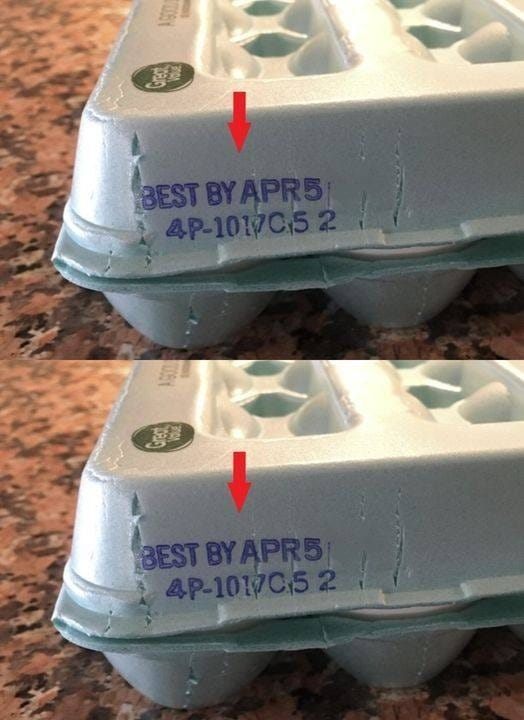
If you’re someone who enjoys eggs regularly—whether scrambled for breakfast, baked into desserts, or poached to perfection—understanding the information printed on egg cartons can make a surprising difference in the quality and freshness of the eggs you bring home. While the packaging may seem like a collection of random numbers and symbols, it actually holds valuable insights that can help you choose the freshest, safest, and most high-quality eggs available.
One of the most important pieces of information is the Julian date, a three-digit number typically found near the expiration or sell-by date. This code represents the exact day of the year the eggs were packed, beginning with January 1 as 001 and ending with December 31 as 365. For instance, if you see a Julian date of 045, that means the eggs were packed on February 14. Understanding this number allows you to determine how fresh the eggs truly are. When properly refrigerated, eggs remain safe to eat for four to five weeks after the packaging date, so this code offers more precision than the standard sell-by label.
Another key detail is the plant code, which starts with the letter “P” followed by four digits. This code identifies the facility where the eggs were processed and packaged. In most cases, it’s not something you’ll need to use, but in the event of a product recall or contamination report, the plant code becomes essential in tracing the eggs back to their source. It adds a level of transparency and safety assurance that many consumers aren’t even aware of.
Equally important is the USDA grade shield, which appears as a small stamp on many egg cartons. This grading system classifies eggs based on the quality of the shell, white, and yolk. Grade AA eggs are the highest quality, featuring thick, firm whites and tall, rounded yolks—ideal for frying, poaching, or any dish where the appearance and structure of the egg matters. Grade A eggs are slightly less firm but still excellent for general use, from baking to boiling. Grade B eggs have thinner whites and flatter yolks and are usually used in processed foods or liquid egg products. While all these grades are safe to eat, the differences can impact texture, taste, and appearance in your cooking.
In addition to reading the codes, how you store your eggs at home plays a major role in maintaining their quality. Always keep eggs in their original carton. Not only does this help preserve moisture and protect the eggs from absorbing strong odors, but the carton also shields them from temperature fluctuations and light exposure. Contrary to what many refrigerators suggest, the door is not the best place for your eggs—it’s often the warmest and least stable part of the fridge. Instead, store your eggs in the back of a main shelf, where the temperature remains consistently cold.
For optimal taste and texture, it’s best to use eggs within three to five weeks of purchase. As they age, egg whites become thinner and yolks less plump, which can affect your dishes, especially baked goods and delicate preparations like soufflés or custards.
By learning how to interpret the Julian date, plant code, USDA grade, and proper storage techniques, you’re not just becoming a smarter shopper—you’re also ensuring every egg you crack is as fresh and flavorful as possible. These small bits of knowledge help you avoid waste, reduce the risk of spoilage, and elevate your cooking experience. Eggs may be simple, but when chosen and handled with care, they can be one of the most versatile and rewarding ingredients in your kitchen.